
Artificial intelligence is helping conservation teams do work that once took months or even years: count elephants across vast landscapes, analyse wildlife footage, digitise handwritten field research and spot wildfire risks sooner. Yet the organisations turning to AI are also worried about the electricity, water and emissions tied to the data centres that run it.
A Reuters report published on November 7 found that all 15 major environmental, conservation and development organisations it interviewed use AI in some form. Every organisation also expressed concern about the environmental impact of the infrastructure behind it. The interviews are not a census of the conservation sector, but they reveal a dilemma that is becoming harder to ignore: the technology can help protect nature while adding to the pressure on natural resources.
AI is changing what conservation teams can measure
One of the clearest examples comes from Kenya’s Save the Elephants. An aerial survey of the country’s largest protected area produced around 200,000 images. Nine people needed nine months to review them manually. AI models trained on Nvidia GeForce graphics platforms can now analyse similar image sets in hours, Reuters reported.
The difference is not just speed. The organisation said the survey showed that manual counts had missed about one-third of the elephants, roughly half of the zebras and giraffes, and around three-quarters of the oryx population. More complete population data can help conservation groups understand where protection is needed and make a stronger case for funding. These figures relate to that survey, not to every wildlife count.
Researchers at the Jane Goodall Institute are using an AI-assisted tool developed with Amazon Web Services to scan, translate and structure decades of handwritten chimpanzee field notes from Tanzania’s Gombe National Park. The material includes local Kiha language and scientific shorthand. A project once expected to take 13 to 15 years is now expected to take about two years, according to Reuters. The tool speeds up the processing, but researchers still need to interpret and validate the records.
Wildfire alerts and edge AI offer a different model
AI can also help conservation teams act before a threat becomes a disaster. Reuters reported that Conservation International has started using AI to assess satellite-detected hotspots and send alerts to community forest patrols in parts of Cambodia. The organisation’s own account of its Tonle Sap fire-alert programme describes how near-real-time satellite detections and GPS coordinates help local teams reach fires while they are still manageable. Conservation International says the programme has helped stop more than 50 fires and protect 64,000 hectares of forest over three years.
The Nature Conservancy is taking another route. Instead of sending large volumes of fishing-vessel video to central data centres, it has installed AI-powered cameras that process information on board the vessels. This approach, known as edge AI, reduces data transfers and can lower the energy needed to move and store raw footage. The organisation uses the analysis to understand what commercial fishing vessels catch.
The World Resources Institute told Reuters it limits resource-intensive AI uses such as generating images and videos, and caches query results so identical requests do not have to be processed again. These are practical ways to reduce unnecessary computation. Greenpeace International, meanwhile, says some of the software platforms it uses already include AI features; it has introduced internal guidance on transparency and human oversight while questioning the scale of data-centre expansion.
The environmental bill behind AI is getting harder to overlook
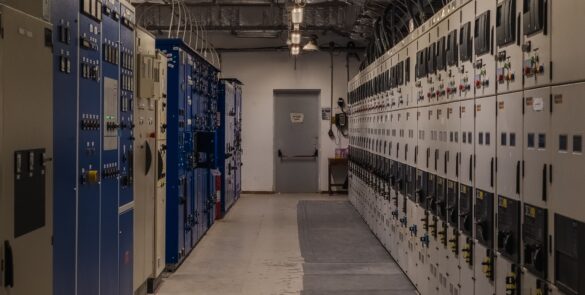
AI does not run in the abstract. Models are trained and operated on servers that need electricity, cooling and physical infrastructure. The International Energy Agency says data centres consumed around 415 terawatt-hours of electricity in 2024, about 1.5% of global electricity use. Its Energy and AI report projects that figure will more than double to around 945 TWh by 2030, slightly more than Japan’s current annual electricity consumption. AI is the most important driver of that growth, alongside other digital services; the projection is for data centres overall, not AI alone.
Water is another part of the equation. Data centres use water directly in some cooling systems, while electricity generation can add an indirect water footprint. The scale of the impact varies by location, cooling design and energy mix, which is why a single global number can hide local pressures.
The trade-off is likely to feature in the climate debate at COP31 in Antalya, Türkiye, from November 9 to 20. Reuters reported that the Turkish host plans to call on governments, businesses and institutions to support principles for sustainable AI development and deployment. UN Secretary-General António Guterres has also called for major AI companies to disclose the environmental impacts of their systems.
Why this matters for India’s AI ambitions
India faces the same question as it expands its digital infrastructure: how to grow computing capacity without shifting the cost onto local power grids, water supplies and communities. A February 2026 assessment by the Council on Energy, Environment and Water (CEEW) and SYSTEMIQ says India’s installed data-centre capacity had reached roughly 1.5 GW by mid-2025 and could rise to 4.5–6.5 GW by 2030.
The study also found that only five of the 15 state policies it reviewed explicitly included sustainability provisions for data-centre development. That gap matters as new facilities are proposed in regions already balancing industrial growth with water and electricity needs. Fragna Tech has previously examined those local questions in its coverage of Google’s proposed AI data-centre hub in Visakhapatnam.
For Indian research institutions, forest departments and conservation organisations, the lesson is not to avoid AI. It is to match the tool to the task. A small model running near a camera may be more appropriate than sending every image to a large cloud model. Reusing results, compressing data, choosing efficient models and measuring energy and water use can make a real difference.
What responsible AI for conservation should look like
The examples point to a more useful way to judge AI projects: measure the conservation result as well as the computing cost. Organisations should be able to explain what a model helps them detect, how much time or field effort it saves, whether its results are checked by people, and what energy and water are needed to run it.
- Use AI where it changes an outcome: faster fire alerts, better wildlife counts or research that would otherwise remain inaccessible.
- Process data closer to where it is collected: edge computing can avoid moving every video or image to a distant data centre.
- Reduce repeat computation: caching, efficient models and avoiding unnecessary image or video generation can cut waste.
- Demand transparency: data-centre operators and AI providers should disclose relevant energy, water and emissions information, especially where local resources are constrained.
- Keep people accountable: field experts and local communities must validate alerts and decisions that affect wildlife and livelihoods.
AI may help conservationists see more clearly and respond faster. But the technology will only be a sustainable ally if the computing infrastructure behind it is held to the same standard of evidence and accountability as the environmental work it is meant to support.